
Leave a Cancel Mark
Back to the after-round ledger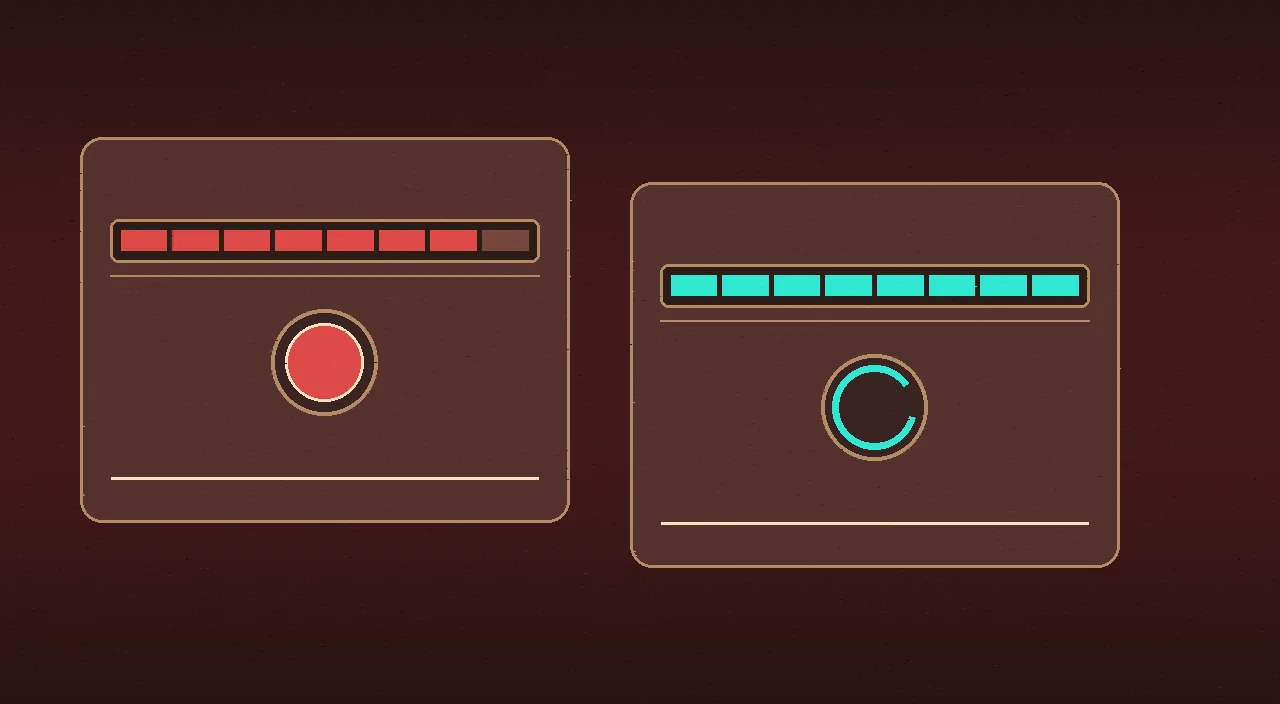
There was a short gap in the line of registered choices. The play log said a player prepared a charge and later cleared it. The visible replay jumped straight to a new round. We could explain the gap after consulting the underlying time strip, but somebody opening the result had no reason to go looking for a withdrawn choice. The graphic needed a mark that belonged to the cancellation and retained what came before it.
A record can include an action that ended early
In the toy round, a player presses a charge command and then cancels before commitment. The meter can return to the waiting state. An earlier ready mark still has a place in the replay. Write the time of cancellation on a separate row with a short connecting line. Give it a word the summary can use. A viewer can now see that a state changed without assuming no command reached the game. The virtual round’s result remains clear even if they start from the frame after the cancellation.
A check for two similar outcomes helps here. One case contains a prepared action and a cancellation. The other never reaches the ready stage. They can finish with the same score. The replay needs to differentiate their histories. A bright X across the entire strip made it look as though the whole test failed. We tried a small open mark near the prior choice and a label beside the exact step. Keep the label in the short slip even if the complete frame sequence is tucked away.
Do not give a canceled choice a later effect
The case is partly about what should remain visible. It is also about what should no longer count. A history state records the earlier command and its withdrawal. On the next live board, the same outline should not be shown as if the player still has a ready charge. The process drawing retains the two values in separate areas. A reader can see the current active condition, while a review link opens the event that left it. That makes it possible to understand the outcome without reading both values as simultaneous.
The simplest phone layout places the active state before the review. A pinned strip may appear below the frame because it refers to the previous run. A keyboard button can open the selected mark for more detail. Keep its destination in the written label. If the visitor can name the mark and return to the same step, it matters less whether they first learned about it from the larger illustration.
Try it with a change in the opposing state
The next test puts the cancellation before an opposing escape is spent. Compare the result to a second virtual round where the opposing state changes first. The short note should reflect the order in both cases. If an observer describes the canceled choice as an accepted commitment, the trial can help identify whether the error comes from the original marker or from its result label. A lower motion view can use the same virtual record without an animated flash to announce the cancellation.
We want the game to give somebody a reason to hold the option open, even when prepared. The result can preserve the prior decision without granting an outcome to it. This gives two users a way to discuss why their rounds ended differently, though both final scores may be unchanged. In a small prototype we can compare these two outcomes carefully before adding another command or phase condition.
Read The Spent Escape for the arena concept. Where the Ruler Stops looks at how a replay lets a viewer find the earlier event without changing its meaning. A useful cancel mark preserves the story of an invented arcade action instead of reducing it to an empty space.