
The Replay Bench
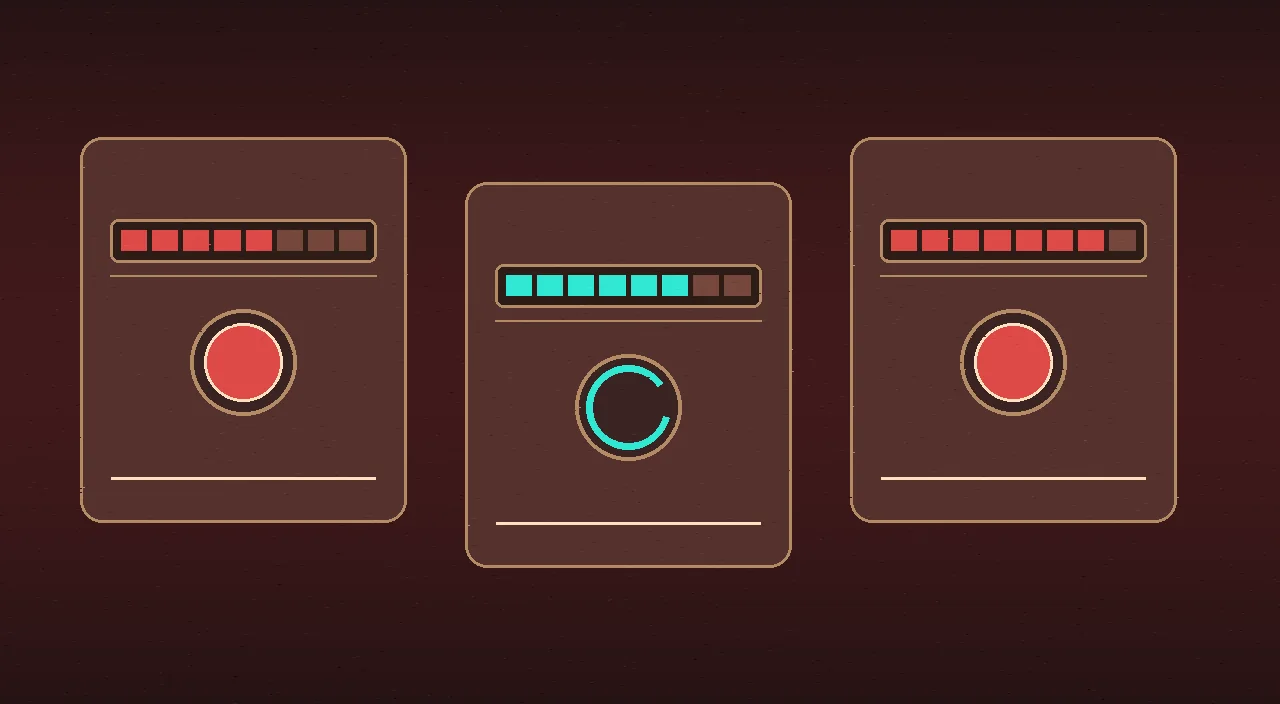
Build a record of the intended decision
The studio starts a prototype around a round someone could explain without reviewing a manual. Put the charge condition on the board. Define a moment when the opponent’s virtual option changes. Save the result the player can inspect afterwards. If the picture tells a different story from the simulation, write the difference down and reduce the round until we can test it again. A single clear result does more work than a longer version that nobody can reconstruct.
Different responsibilities share one replay
A rules designer decides how the fictional preparation and commitment work. It matters whether an input arrived while another choice was available. That relationship needs to survive an early cancellation or a late change of state. The rule role keeps a small inventory of recorded beats as a baseline.
The illustrator looks for the state in the picture. A charged meter can have a complete outline; a spent token needs a readable empty shape. The art role can vary shadow, background or camera while keeping those choices stable. If the state cannot be found from a small image, the next proof can place the right label beside the area a reader already notices.
The interface role sees whether a control actually opens the promised frame. A visitor who scrubs the ruler can read the new label. A visitor moving one step at a time should find the same state. On compact screens the thumbnail can sit under the selected frame rather than shrinking the control. Different motion and sound settings should preserve the result’s evidence.
Publish a bounded design question
Write the point of the test beside the proof image. Include enough of the earlier frame that a reader can see what would otherwise be easy to overlook. Notes about the simulated meter, the cancel route, the ruler and the sound cues are filed in the after-round ledger. Each one points to the full game concept and its stated scope. We can revisit a page when a reader describes the position the reply arrived. The projects shown here are fictional prototypes in development. Site feedback is most useful when it identifies the name of a scene, the label involved or a navigation action that sent the visitor somewhere unexpected.