
A Bell with a Caption
Back to the after-round ledger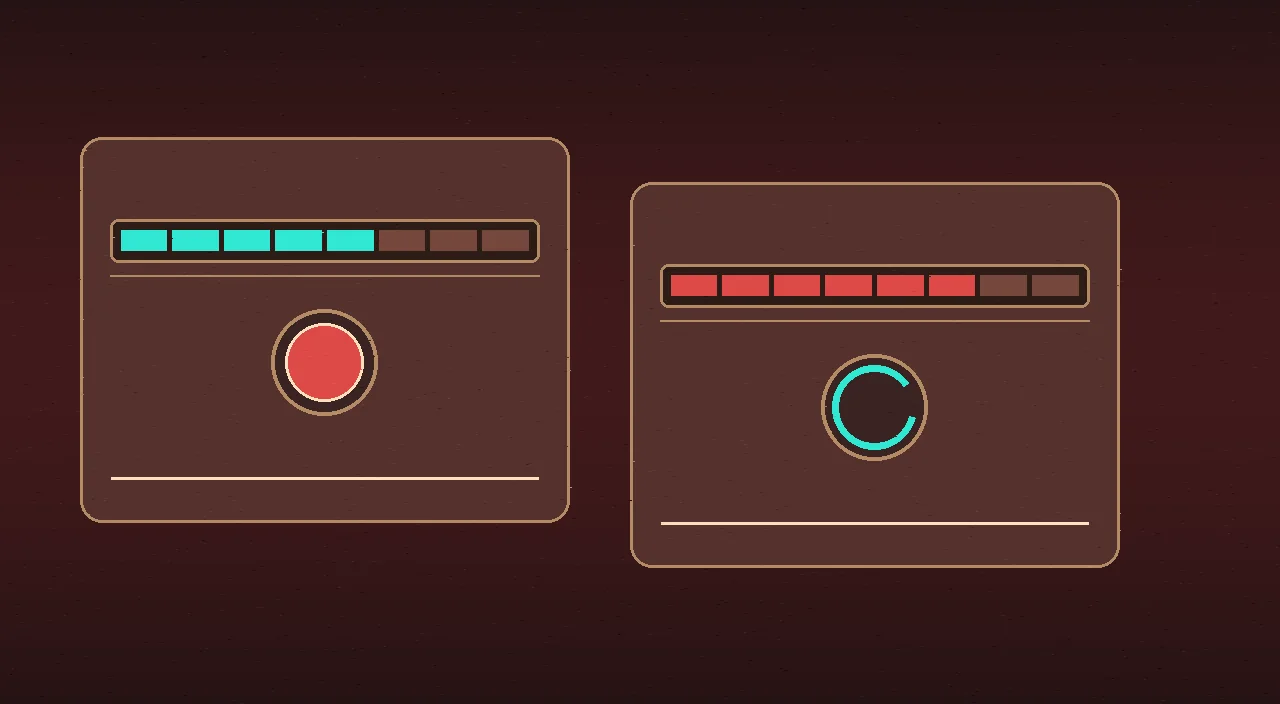
An end-of-round chime gave the first version a satisfying stop. Turning off the sound exposed what the image had failed to say. A preparatory switch beside the meter changed at almost the same time as a confirmed result. The only difference was a faint outline. The camera moved to the next part of the recording before the viewer had an opportunity to read it. We wanted the useful information to outlast the sound.
Put confirmation inside the state it changes
The virtual round can announce that a charge is ready and later that the game accepted the action. Use a separate visual marker for the second event and give it a short written label. A lighting shift can be part of the scene, while the word and outline describe the condition. Put the important signal on the result as well. A player who was looking at the opposing state during the change may choose to review the evidence instead of trying to catch the chime on a second attempt.
In the first pass the mark appears just under the simulated choice. An optional sound can coincide with it. A playback view can use the same word when sound is off. The mark remains available while the viewer reads the end of the round. This is one distinction we can check before attempting a more elaborate soundtrack. If the interface has to explain which of two nearby chimes belongs to the recorded outcome, put a better visual marker near the one that actually matters.
Give the quiet version its own test
Pause on the result with sound muted. A reader should be able to find the confirmed state and identify the rule that made it available. If the image updates without leaving a visible indication somewhere, the result may look like new preparation. A caption in the earlier scene can establish the meaning of each light, but the final result needs its own terms. Use a pair of short indicator words that can be read even when a larger image is not present.
The next check restores sound without changing the visual result. Ask whether both values appear to belong to the same moment. If the chime seems to belong to the earlier ready meter, the sound and marker may not be timed closely enough. A larger effect could simply make the confusion louder. Try a cleaner pause between the milestones first. After that, compare the same scene at two widths and with motion turned down. The virtual game state should remain understandable in both.
Keep the result stable after replay closes
Some viewers may glance at the scene, open a note, and then return without replaying the whole turn. Give the result card a persistent name. It can point to a recorded choice, the opposing escape state, and the confirming event. The earlier visible action belongs in that context even after an optional audio playback ends. The link from a development note can identify the same result without implying that sound was required to produce it. The extra narration can help people understand a picture the first time they see it and should not be the sole place where the game reports a status.
A later test varies the pacing of the review without modifying the time at which the original result arrived. A reader who watches both versions should be able to name the same status while taking a different amount of time to read it. We can check whether the confirming mark survives long enough by asking someone to point to it after they find an earlier frame. If they confuse a previous mark with the current one, include a written reference to the time strip rather than emphasizing a transient flash.
See Charge Replay for the discussion of its recorded steps. The related proof Leave a Cancel Mark examines a result where the game recorded an earlier action without applying it. Both offer a way to understand a virtual outcome without needing to hear the arena audio.